Sub-Total: $0.00
Advancing cultural or cold burning as a nature-based solution to protect mangroves
Building Trust, Restoring Coastal Landscapes - Clyde River/Bhundoo cultural burning project
OceanWatch Australia is proud to be working with the Batemans Bay Local Aboriginal Land Council and project partners on Building Trust, Restoring Coastal Landscapes — an innovative Nature-led Resilience project helping coastal communities prepare for a changing climate.
Centered on the Clyde River catchment and adjoining coastal habitats, the project supports Aboriginal-led cultural burning behind mangroves to reduce fuel loads, protect sensitive estuarine ecosystems and strengthen local resilience to future bushfire risk. By bringing together Traditional Owners, scientists, land managers, emergency services and community stakeholders, the project is building trust, sharing knowledge and exploring practical pathways for culturally informed fire management in coastal landscapes.
This project is being delivered in collaboration with NRM Regions Australia with the support of the Minderoo Foundation. OceanWatch also gratefully acknowledges the leadership and contributions of the Batemans Bay Local Aboriginal Land Council, University of Wollongong, NSW Rural Fire Service, University of Melbourne and local and state land management agencies.
Cultural knowledge and cultural authority
This project recognises that cultural knowledge is a living knowledge system held and practiced by Walbunja Traditional Owners and cultural knowledge holders. Knowledge of Country includes relationships between land, water, plants, animals, seasons, weather, fire, cultural places and community responsibilities. It is built through generations of observation, practice, teaching and caring for Country, and it provides an important foundation for understanding how coastal landscapes respond to fire and climate pressure.
Cultural knowledge will guide how the project understands place, identifies appropriate areas for treatment, interprets seasonal conditions and ecological indicators, and considers the relationship between forest, wetland, estuary and Sea Country. This means decisions about cultural fire are not based on fuel load alone; they also consider cultural values, habitat condition, plant response, animal movement, water and soil conditions, access, cultural sites and the right time to undertake work.
Traditional Owner authority is central to this approach. Cultural knowledge will be shared and used with the permission of the appropriate knowledge holders, and sensitive cultural information will remain under Aboriginal control. The project will support respectful knowledge exchange between Traditional Owners, Rangers, scientists, land managers and emergency services without replacing cultural authority with agency or scientific decision-making.
In practice, cultural knowledge may inform:
- seasonal timing and indicators for when Country is ready, or not ready, for fire
- identification and protection of cultural sites, pathways, gathering places and culturally important species
- selection of burn boundaries, ignition patterns and areas to be deliberately left unburnt
- understanding connections between fire, vegetation structure, soil, water, wetlands, estuary health and wildlife habitat
- post-burn observation, cultural monitoring and learning to guide future burns
The Problem, or Yet Another Symptom of Climate Change?
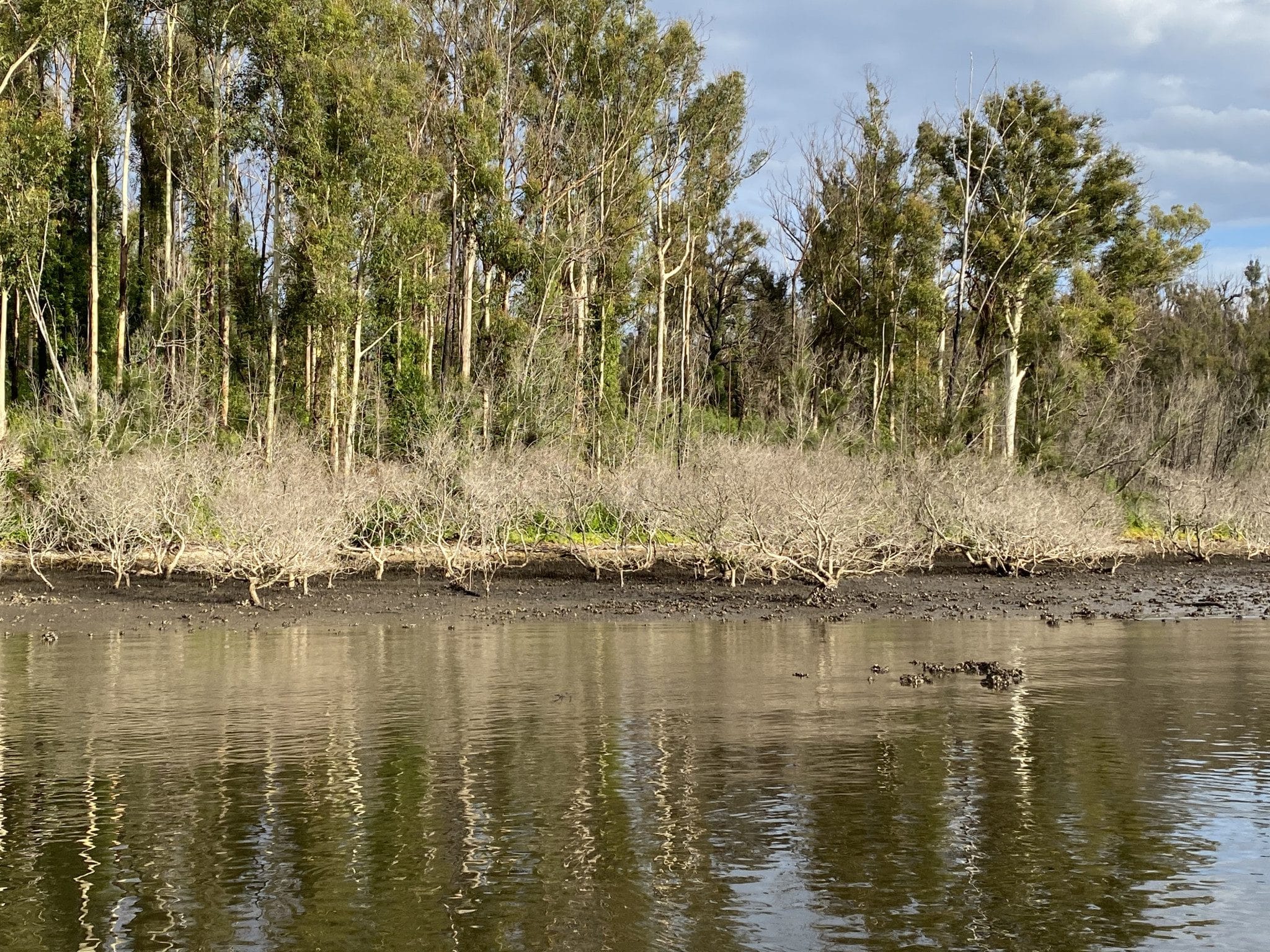
“During the 2019–20 Black Summer bushfires, mangrove forests in NSW were affected by significant fire intensity. Although mangroves are generally protected from fire by their tidal environment and high moisture content, extreme drought conditions and intense radiant heat from fires in the surrounding forests resulted in some mangrove stands being burnt or killed. These impacts highlighted that even fire-resilient coastal ecosystems can be vulnerable under extreme climate conditions.”
The Rationale for Changes to Land Management
Much of the coastline in the estuary is backed by a mixture of wet and dry dense forest that was burnt during the Black summer fires in 2019/2020. Those areas (burnt 5 years ago) are regenerating thick stands of understory, often green wattle. What this means is that a large fuel load is returning rapidly.
Although current land management varies across tenures, fire management has some level of consistency based on available guidelines and legislative requirements on minimum fire intervals. These are partly designed to protect biodiversity while balancing life and property protection.
In New South Wales, fire management guidelines distinguish between dry and wet sclerophyll forests based on their understorey to balance biodiversity and risk. Dry sclerophyll forests thrive on more frequent fires, with a recommended ecological interval of 7 to 30 years. For asset protection and hazard reduction, the legal minimum fire interval drops to between 5 and 10 years, depending on whether the understorey is predominantly shrubby or grassy.
Conversely, wet sclerophyll forests are highly sensitive, damp environments that require much less frequent fire intervention. Grassy variations have an ecological interval of 10 to 50 years (with a 10-to-15-year hazard reduction limit), while shrubby variations require 25 to 60 years between burns. Unlike dry forests, wet sclerophyll systems rely on infrequent, high-intensity fires at the upper limits of these cycles to successfully trigger canopy regeneration, meaning any hazard reduction burns must strictly remain low-intensity. This project is exploring whether the guidelines and legislation are fit for purpose in the new climate change reality the South Coast is now experiencing.
Reducing Radiant Heat Risk from Nearby Vegetation
In a wet sclerophyll forest, radiant heat reaching neighbouring vegetation (such as rainforest gullies, wetlands, mangroves or riparian zones) is influenced by fire intensity and flame length which in turn is a factor of:
- Fuel load and fuel arrangement
- Vegetation structure (vertical continuity)
- Moisture content of fuels
- Landscape position (slope, aspect, wind exposure)
- Evidence-based approaches that can reduce radiant heat risk as an intervention
1. Reduce fine fuel loads around sensitive areas
Radiant heat is strongly related to flame height and fire intensity. Reducing surface fuels (leaf litter, bark, grasses, fallen branches) can reduce flame energy and therefore heat transfer.
A commonly cited principle in fire behaviour is that radiant heat increases rapidly with flame length. The NSW Rural Fire Service uses flame length as a key indicator because longer flames produce substantially greater radiant heat exposure.
Practical actions:
- Strategic low-intensity burning where appropriate
- Mechanical removal of fine fuels near assets or sensitive ecosystems
- Targeted fuel breaks
- Maintaining lower fuel loads in buffers around wetlands
2. Create “ecological buffers” rather than just fire breaks
Research increasingly supports mosaic fuel treatments rather than broad-scale clearing. In wet sclerophyll systems, retaining canopy and mid-storey complexity while reducing connected fuels can slow fire spread.
A buffer zone can:
- Improve suppression effectiveness
- Reduce flame contact
- Reduce spotting
- Reduce wind-driven fire intensity
- Provide a lower-intensity transition before fire reaches vulnerable vegetation
For example, riparian zones can act as a barrier to the spread of fire if the moisture content of the fuel is high. However, under drought conditions even riparian zones will become dry and available to burn.
3. Maintain moisture and landscape hydration
Wet sclerophyll forests naturally moderate fire behaviour when moisture is high.
Actions that support this:
- Protect drainage lines and gullies
- Avoid soil compaction and hydrological changes
- Maintain wetland function
- Restore riparian vegetation
- Reduce invasive grasses that dry rapidly and carry fire
This is particularly relevant because invasive plants such as grasses can convert moist forest edges into more flammable systems.
4. Manage bark fuels
Many Australian wet sclerophyll forests contain eucalypts with stringy bark or fibrous bark that contributes to spotting and intense fire behaviour.
Management options:
- prescribed burning regimes that reduce accumulated bark and surface fuels
- maintaining species diversity where appropriate
- protecting old-growth features while reducing hazardous fuel accumulation near priority areas
5. Cultural burning approaches
Cultural burning is an Aboriginal-led practice of Caring for Country. It uses fire deliberately, carefully and at a scale, intensity, season and frequency that responds to the needs of a particular place. The purpose is broader than hazard reduction: cultural fire can support healthy vegetation, protect cultural and ecological values, improve access and visibility, maintain habitat diversity, reduce connected fuels and strengthen the transfer of cultural knowledge between generations.
For the Clyde River/Bhundoo coastal landscape, cultural burning provides an opportunity to work with the natural differences between forest, wetland, riparian and estuarine environments. Burns can be designed as small, low-intensity and patchy treatments that reduce fine fuels while retaining unburnt refuges and protecting sensitive areas. The aim is to create a more varied landscape in which fire behaviour is moderated before it reaches vulnerable wetlands and mangroves.
Cultural burning is guided by the principle of applying the right fire, in the right place, at the right time and for the right reason. Before any burn, Traditional Owners and project partners will consider cultural authority, seasonal indicators, weather, fuel moisture, vegetation condition, biodiversity values, cultural heritage, smoke impacts, operational safety and required approvals. Burns will not proceed where cultural or environmental conditions indicate that fire is inappropriate.
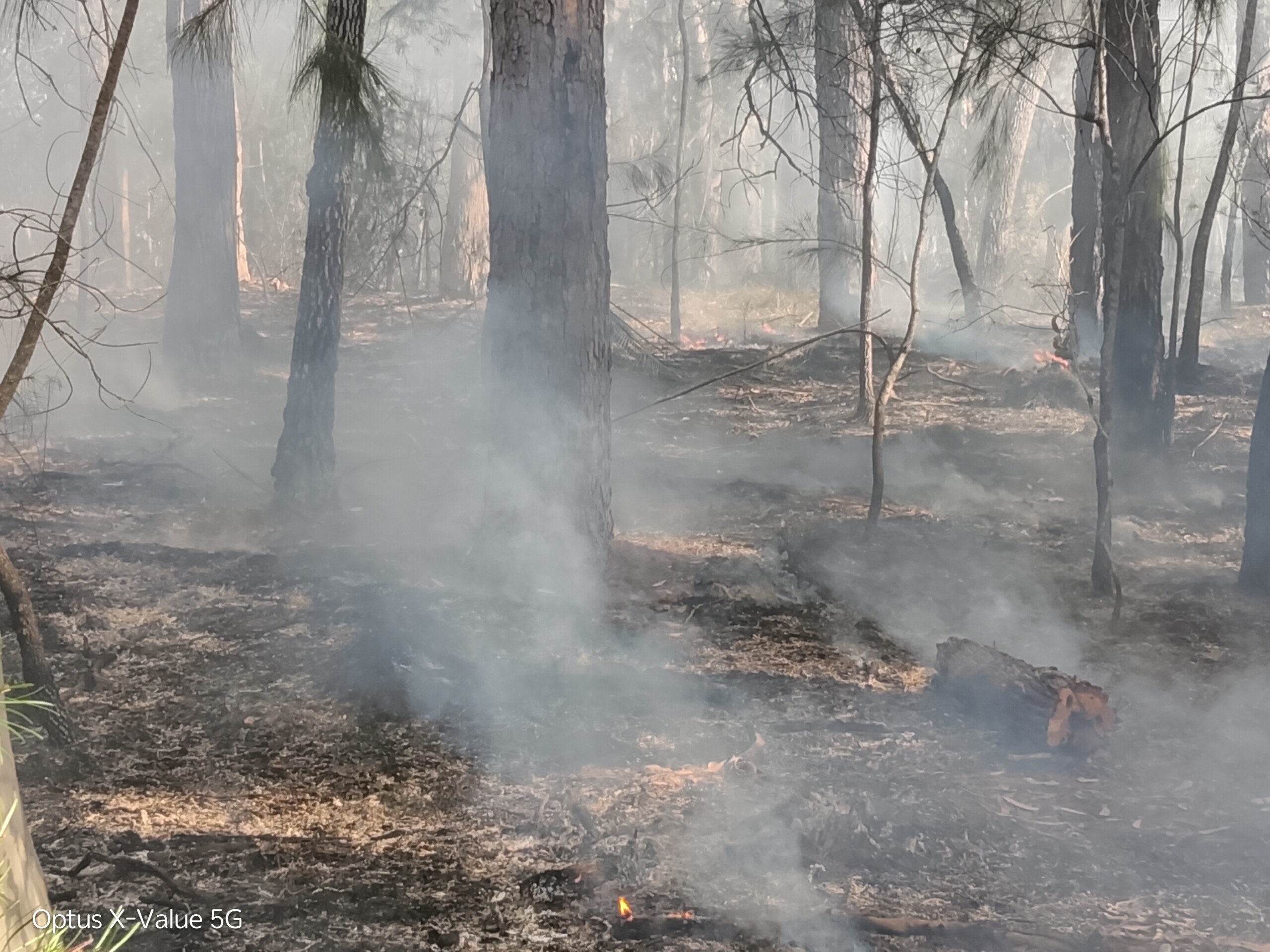
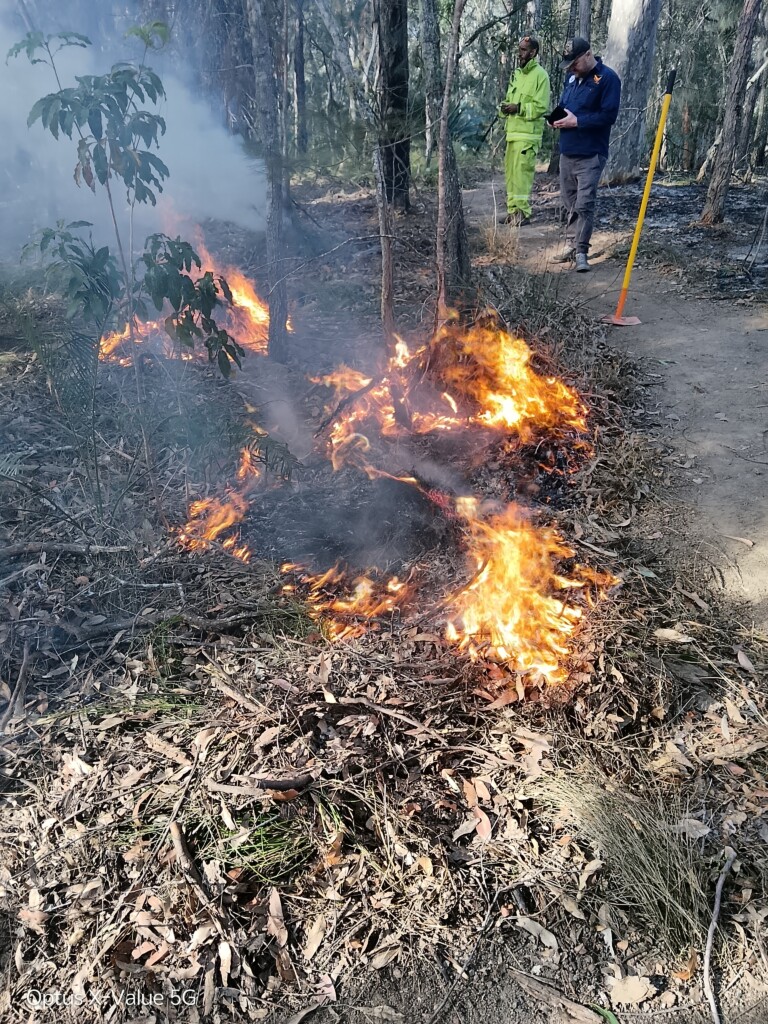
Where burns are undertaken, the project will support on-Country learning and monitoring before, during and after fire. Observations of flame behaviour, burn patchiness, fuel reduction, plant recovery, habitat use, soil and moisture condition, and impacts on adjacent wetlands or mangroves can be considered alongside cultural observations. This combined learning will help refine future treatment and demonstrate how cultural knowledge and contemporary fire science can work together under Traditional Owner leadership.
Indigenous-led cultural fire practices aim to create:
-
-
-
-
-
-
-
-
-
-
-
-
-
-
-
- lower intensity burns
- fine-scale mosaics
- reduced fuel continuity
- healthier vegetation structure
-
-
-
-
-
-
-
-
-
-
-
-
-
-
Rather than “burning everything”, many cultural burning approaches focus on frequency, timing, patchiness and ecological outcomes, which can reduce the likelihood of a future high-intensity fire generating extreme radiant heat.
Cultural knowledge governance will be incorporated into project planning and evaluation. Any cultural information recorded through interviews, workshops, mapping or on-Country activities will be handled according to the direction of Traditional Owners and Batemans Bay Local Aboriginal Land Council. Public reporting will distinguish between information suitable for general release and knowledge that is restricted, culturally sensitive or not approved for publication.
The project will:
On mixed tenure lands explore if restoring culturally appropriate fire regimes in adjacent wet sclerophyll landscapes can reduce extreme heat exposure to coastal wetlands during future megafires.
Conduct social research alongside the burns to explore:
- Cultural fire perceived benefits, risks, governance challenges, and potential contribution to disaster resilience.
- Views of Traditional Owners, community stakeholders, seafood industry, landholders, emergency services, and government agencies to strengthen cross-sector dialogue, identify barriers and opportunities for implementation, and build understanding of the social and institutional conditions needed to support Indigenous fire management practices.
The findings will deliver actionable recommendations to guide collaborative decision-making, support future cultural burning initiatives, and inform the national nature-led resilience program.
The project forms part of the National Nature-led Resilience : Safeguarding Regions from Fire, Flood and Climate Risks Initiative, delivered in collaboration with NRM Regions Australia with the support of the Minderoo Foundation. The ongoing national program is supporting nature-based solutions that reduce landscape-level fire, flood and climate risk while delivering benefits for people and nature.
Another project focusing on fire impact mitigation is titled- Living Firebreaks. a project delivered in collaboration with NRM Regions Australia with the support of the Minderoo Foundation as part of an ongoing national program to improve awareness, capability, and investment for nature-based solutions that can deliver broad benefits across Australia. The project is part of a wider National Nature-led Resilience Program, led by NRM Regions Australia, which aims to improve awareness of, and increase investment in, NbS for reducing climate risks like flood and bushfire.
https://nrmregionsaustralia.com.au/project/nature-led-resilience-project/
Stay tuned for more updates on the project as it progresses!